
News You Can Use: News items from external sources that might be useful to MDSR residents.
Discover Tumbler Ridge’s History and Wonders
Nestled in the foothills of the Rocky Mountains in northeastern British Columbia, Tumbler Ridge is a place where deep time, resilient community spirit, and spectacular natural beauty come together. This year’s last MD Summer Bus Tour heads there on Friday, August 28—your final chance this season to experience one of the Peace Country’s most rewarding destinations. Seats are limited, so book soon and join us for a day that blends fascinating history with must-see attractions.
From Ancient Footprints to Instant Town
People have lived in and moved through this landscape for thousands of years. Archaeological evidence points to human presence dating back at least 3,000 years, with the nomadic Sekani, followed by the Dane-zaa and Cree, using the area for temporary settlements and travel. European exploration came later: formal expeditions in the early 20th century mapped the rugged terrain, and the name “Tumbler Ridge” itself comes from a ridge marked by rockslides, adapted by geologist Edmund Spieker from earlier maps.
Permanent settlement began sparingly in the 1920s. Kate Edwards, a determined widow, established a ranch in the Wolverine Valley in 1921 and drove cattle long distances to market. In the 1930s, local promoter Alex Monkman championed a highway through the low Monkman Pass to connect Peace River grain farmers to markets—an ambitious dream that left a lasting mark on the region’s trails and stories.
Everything changed with coal. Large deposits were identified in the mid-20th century. After the 1970s energy crises, a major agreement in 1981 between Canadian mining companies (including Denison and Teck), a consortium of Japanese steel mills, and the governments of British Columbia and Canada launched the Northeast Coal Development. Tumbler Ridge was created from scratch as a planned “instant town” to house workers for the Quintette and Bullmoose mines. Incorporated as a district municipality in 1981, the community, infrastructure, and mines rose rapidly; the first residents arrived in the early 1980s. It was designed with livability in mind, aiming to avoid the pitfalls of traditional company towns.
The mines supplied metallurgical coal for years, but the community faced hard times when Quintette closed in 2000 and Bullmoose in 2003. Rather than fade, Tumbler Ridge diversified—embracing forestry, energy, outdoor recreation, and especially tourism. Coal mining has seen revivals at times, yet the town’s true renaissance came from an unexpected source: dinosaurs.
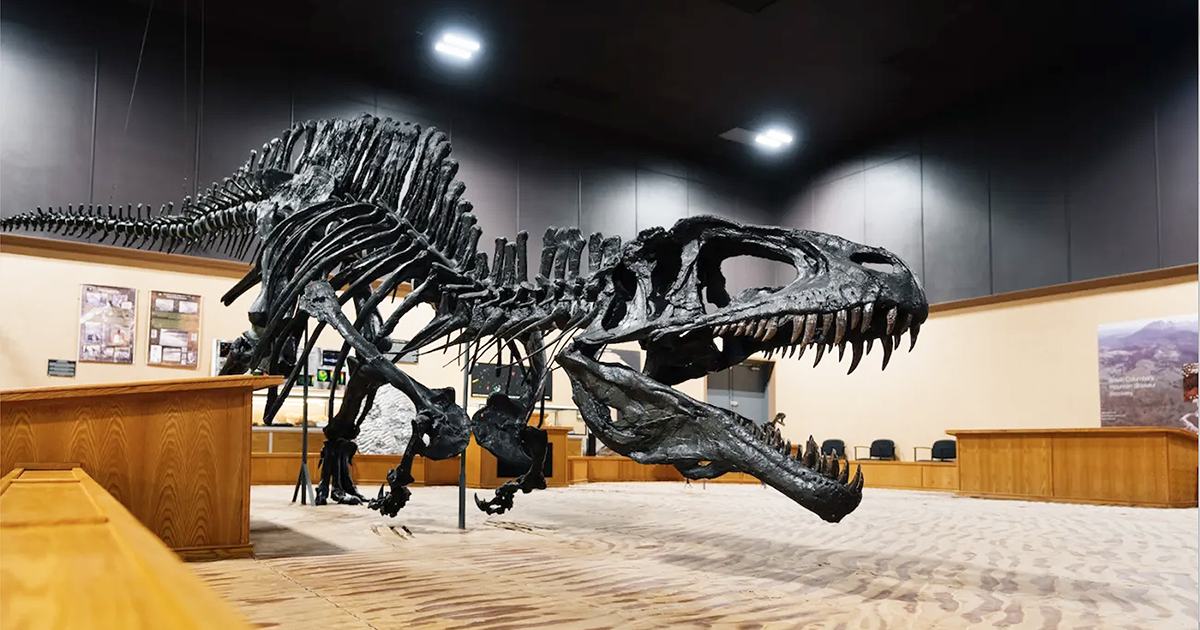
In 2000, two local boys discovered dinosaur trackways along Flatbed Creek. That find triggered a cascade of discoveries—ankylosaur tracks, rare tyrannosaur trackways (including evidence that these predators may have moved in groups), bonebeds, and more. Today the area holds some of British Columbia’s most significant paleontological resources, spanning marine life from when the region was underwater, dinosaur footprints and bones, plant fossils, and Ice Age mammals.
The Tumbler Ridge UNESCO Global Geopark
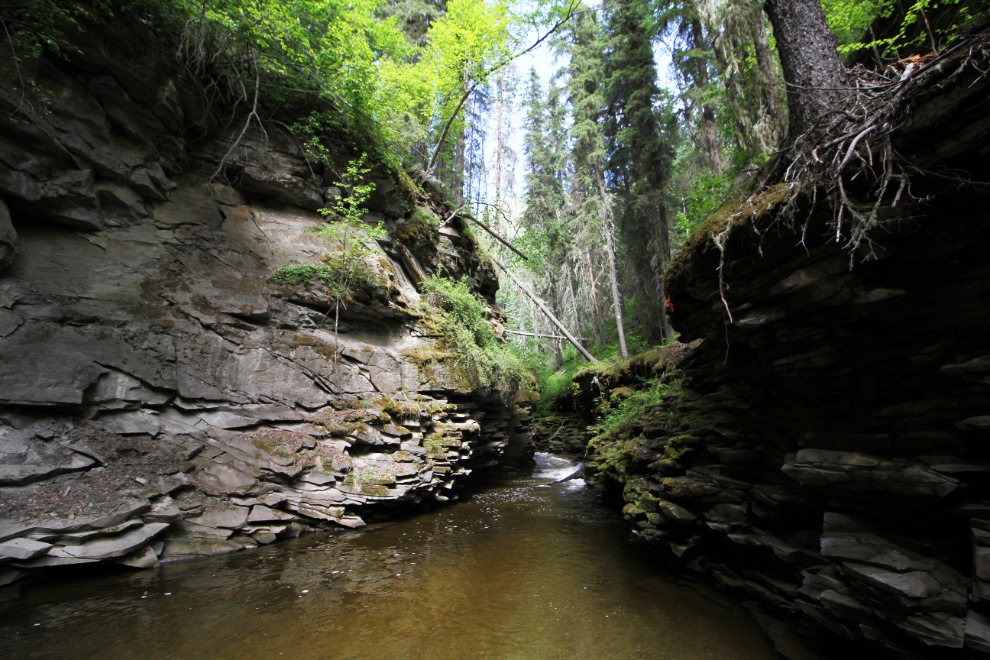
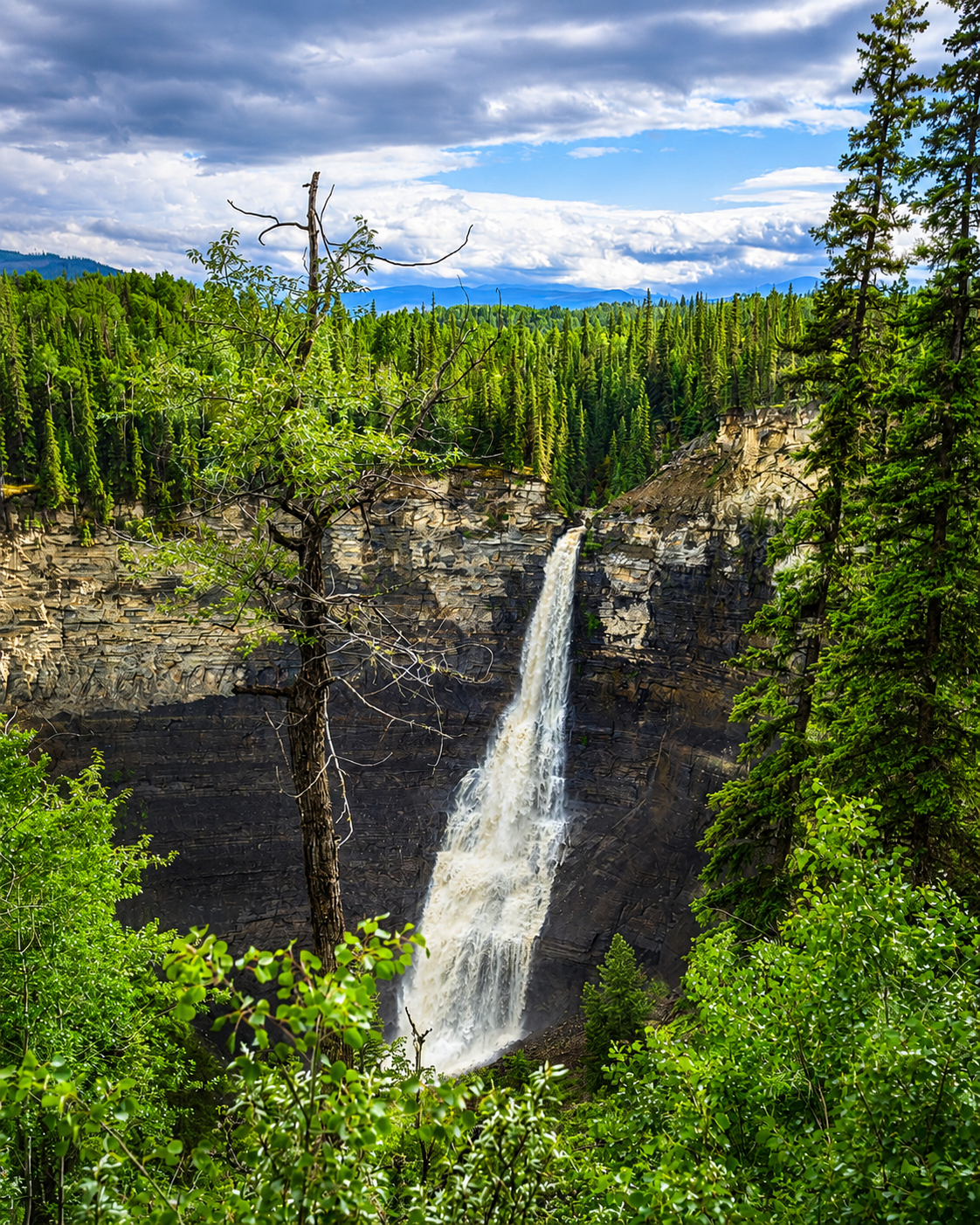
In 2014 (with formal recognition following), the region earned designation as a UNESCO Global Geopark—one of only five in Canada and the only one in western North America. Covering roughly 8,478 square kilometres, it showcases outstanding geology: ancient mountain-building, glacial shaping, waterfalls, canyons, caves, alpine meadows, and world-class dinosaur trackways.
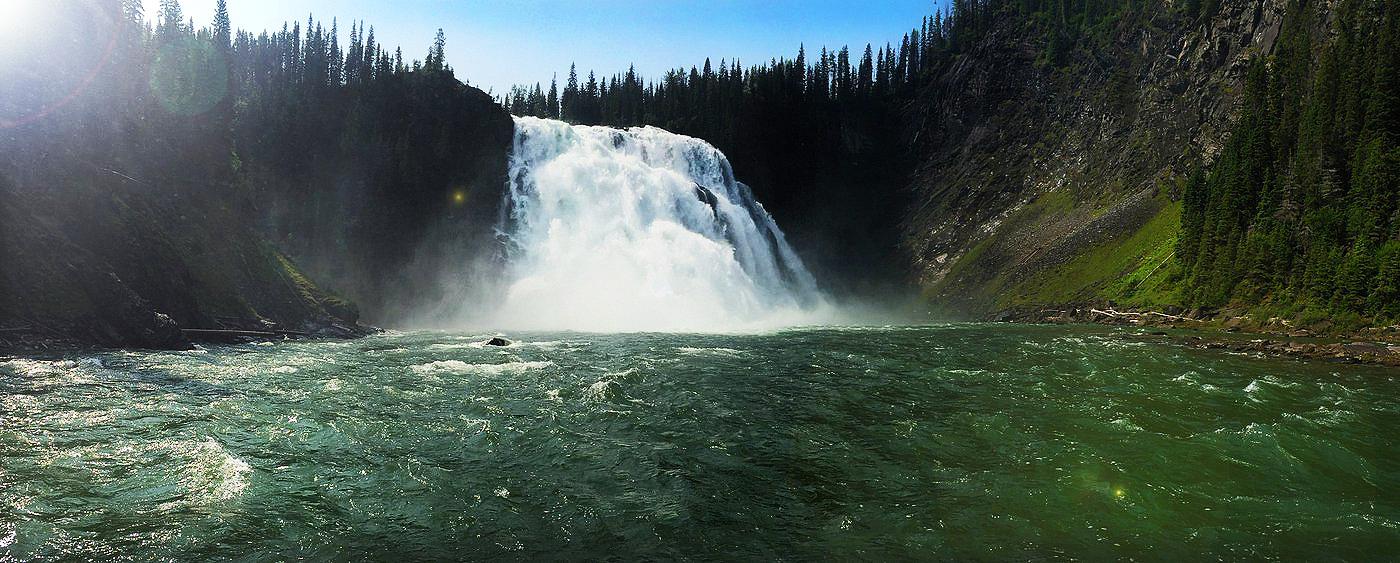
Highlights include Kinuseo Falls in nearby Monkman Provincial Park (taller than Niagara Falls and a dramatic centrepiece), the Flatbed Valley geosites with accessible trackways, the Shipyard and Titanic rock formations, Bergeron Falls, and numerous hiking trails. Unlike strict national or provincial parks, a Geopark celebrates geological heritage while remaining open to compatible activities and community life. It is a living landscape of discovery—perfect for walking in the footsteps of dinosaurs, chasing waterfalls, or simply soaking in the foothills scenery.
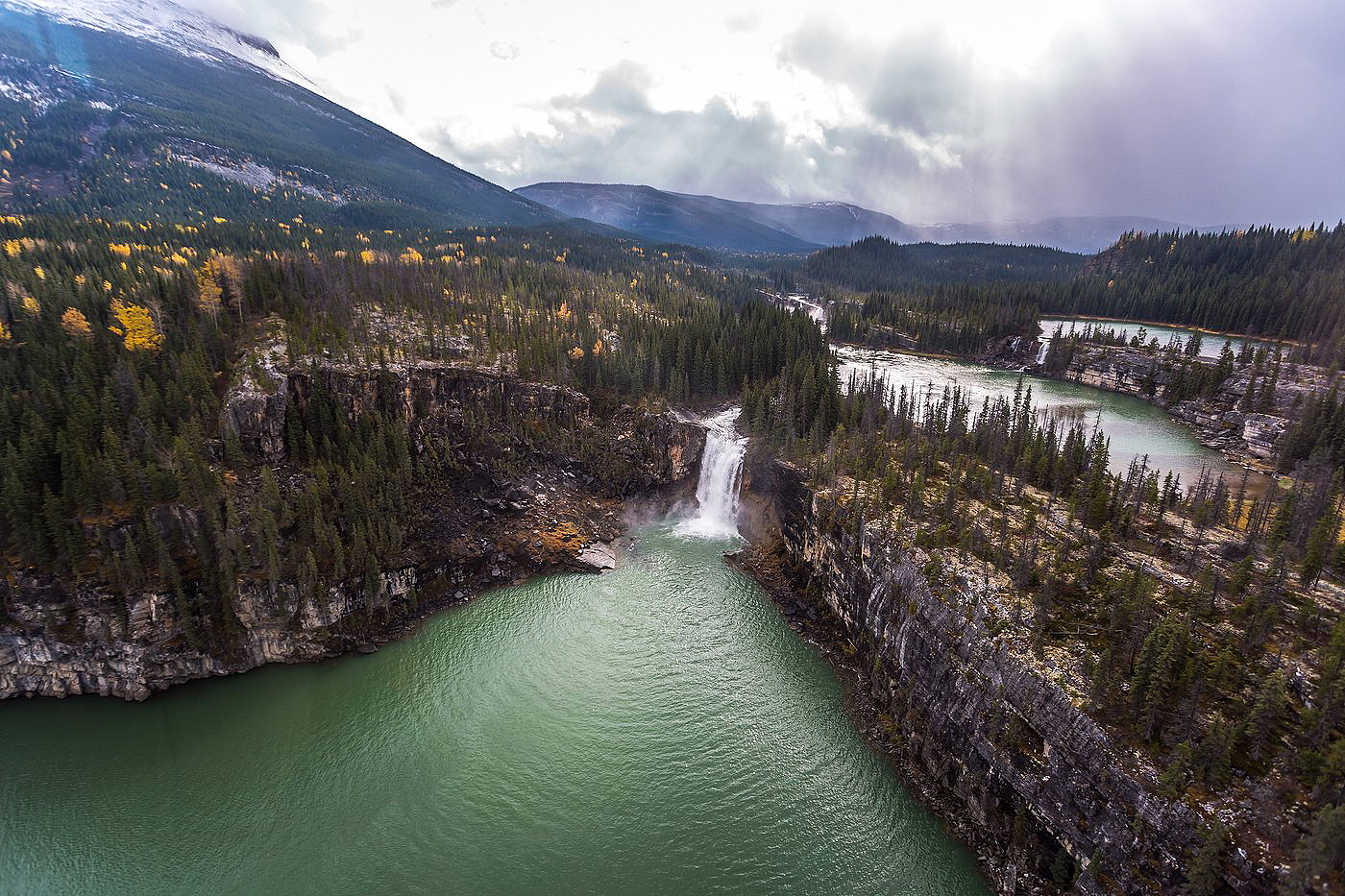
Tumbler Ridge Museum and Dinosaur Discovery Gallery
The Tumbler Ridge Museum Foundation grew directly out of those 2000 trackway finds. Its Dinosaur Discovery Gallery (and associated research centre) displays an impressive collection spanning more than 200 million years: marine reptiles and fish from the Triassic, dinosaur footprints and bones, plant fossils, and Ice Age mammals. You’ll see rare tyrannosaur tracks, local specimens unavailable elsewhere, and stories of both scientific research and citizen discoveries.
Guided trackway tours (typically offered in summer) take visitors to sites such as Cabin Pool/Flatbed Creek, where dozens of prints from multiple dinosaur types are visible in the bedrock. The museum also preserves human history and partners closely with the Geopark. It’s an essential stop for understanding why this remote corner of BC has become a paleontology hotspot.
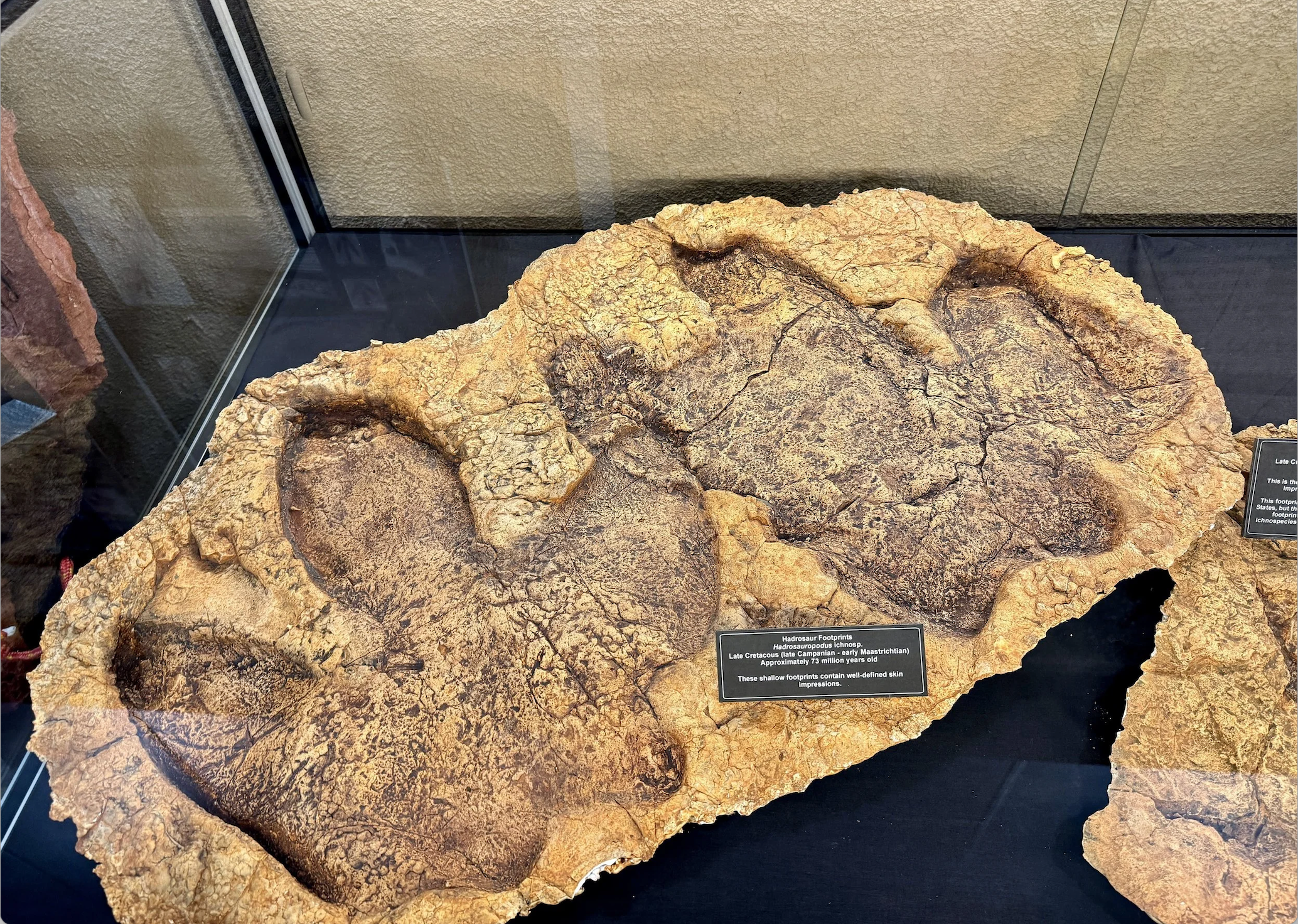
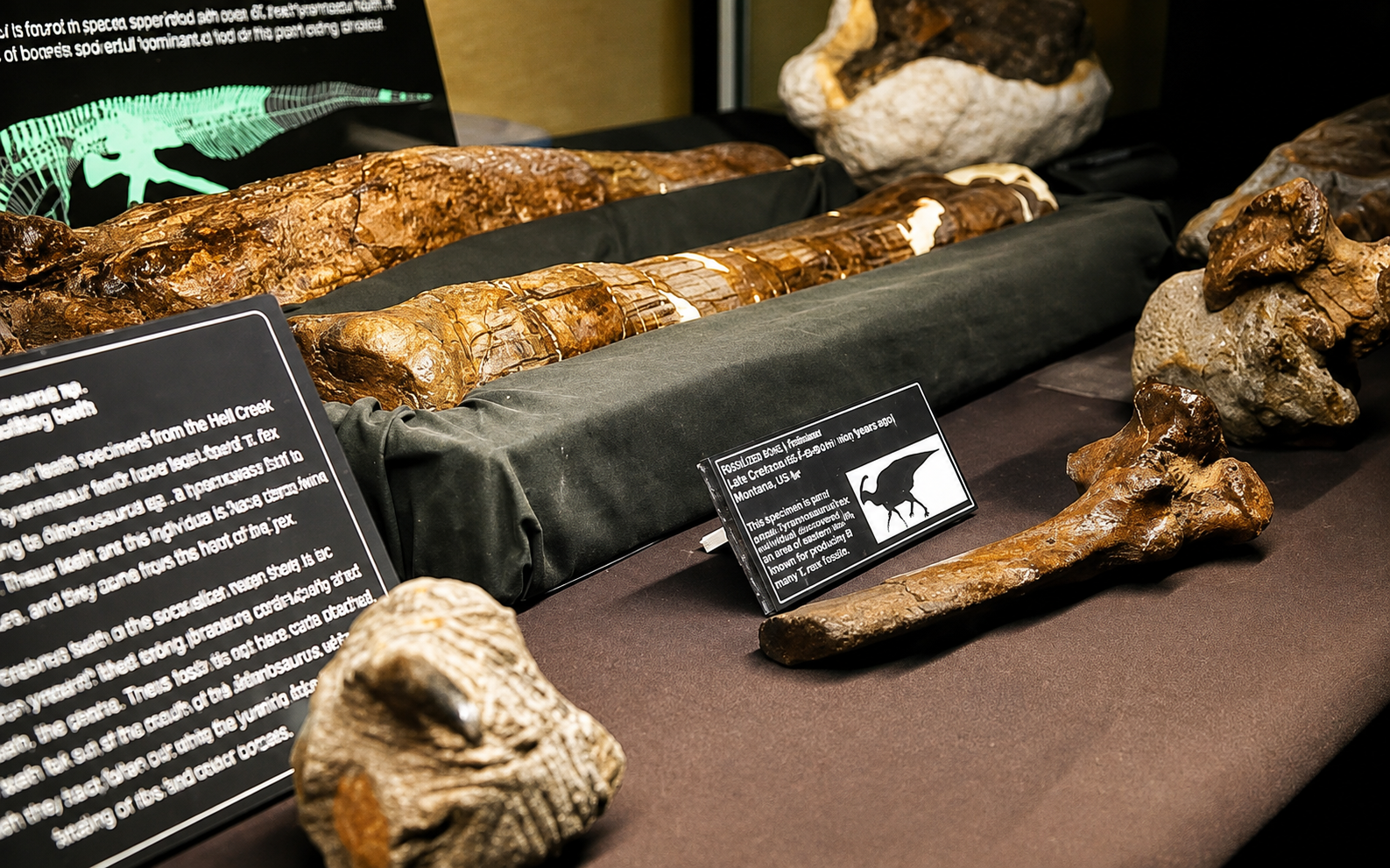
The Community Centre: Heart of Town
The Tumbler Ridge Community Centre serves as a welcoming hub for visitors and residents alike. It features a full aquatic centre (pool, tots pool, sauna, hot tub, steam room), fitness facilities, squash/racquetball courts, ice arena, curling rink, indoor playground, public library, art gallery showcasing local work and scenic photography, and a Sports Hall of Fame. Historical displays and the human-history side of the museum story are also found here, offering context on pioneers, the Monkman Pass era, coal-mining beginnings, and early dinosaur finds. It’s a great place to stretch, learn a little more, or simply enjoy the friendly atmosphere of this resilient community.
Why This Trip Matters—and Why You Should Book Now
Tumbler Ridge is no longer just a former mining town. It is a UNESCO Global Geopark destination where ancient Earth history meets modern outdoor adventure and warm small-town hospitality. On our bus tour, you’ll enjoy the scenic ride into the foothills, time at the Geopark highlights, the Museum’s extraordinary fossils and trackways, and the amenities of the Community Centre—all in the company of fellow travellers on the final MD Summer Bus Tour of 2026.
Friday, August 28 is the last summer departure. Don’t miss this opportunity to explore a place that was built in a few short years, nearly lost its economic heart, and reinvented itself around dinosaurs, waterfalls, and wild beauty. Book your seat today and experience Tumbler Ridge for yourself—history, wonder, and a memorable day trip await.
To save a spot on the bus, call the office at (780) 864-3500.
Bus Fare: Age 16+ $25.00; Under 16 $5.00
Fare is due upon registration. Riders are responsible for all expenses over and above the bus fare.
The bus leaves the MD garage at 8:30 AM to pick up passengers at designated locations and will return between 3:30 PM and 4:00 PM.
Priority given to seniors and people with limited mobility.