
News You Can Use: News items from external sources that might be useful to MDSR residents.
From End of Steel to Mile Zero
Dawson Creek’s Living Heritage
The next stop on our Summer Bus Tour is Friday, August 7, 2026, when we will be heading for Dawson Creek.
Dawson Creek, British Columbia—known as the “Mile 0 City” at the southern terminus of the Alaska Highway—preserves its agricultural, railway, and pioneer heritage through three closely linked sites: the Dawson Creek Art Gallery, the N.A.R. Station Museum, and Walter Wright Pioneer Village. These attractions, shaped by local societies, volunteers, and civic effort, transform everyday structures of the South Peace into living records of settlement, grain shipping, rail arrival, and wartime transformation.
The N.A.R. Station Museum and N.A.R. Park
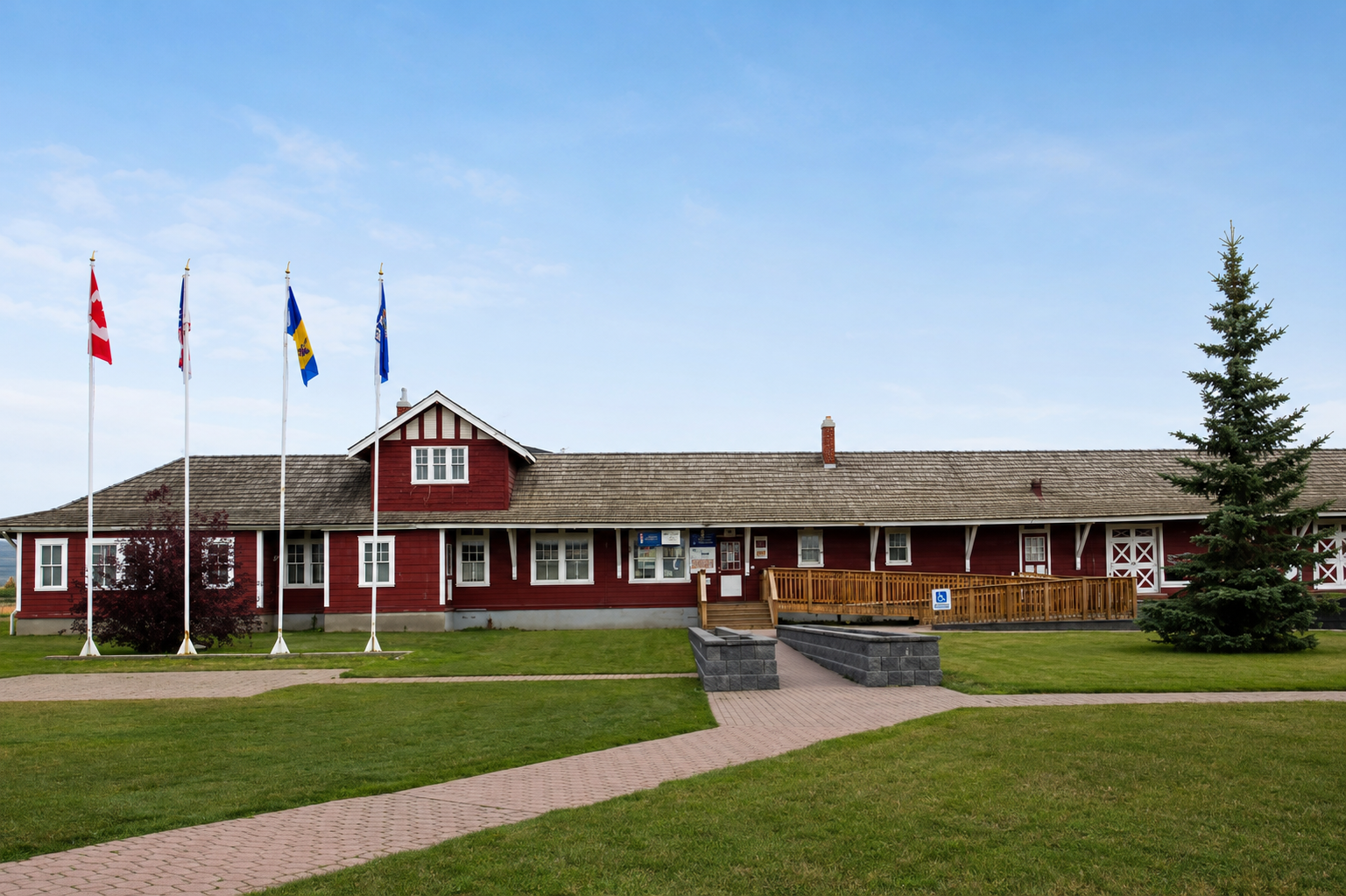
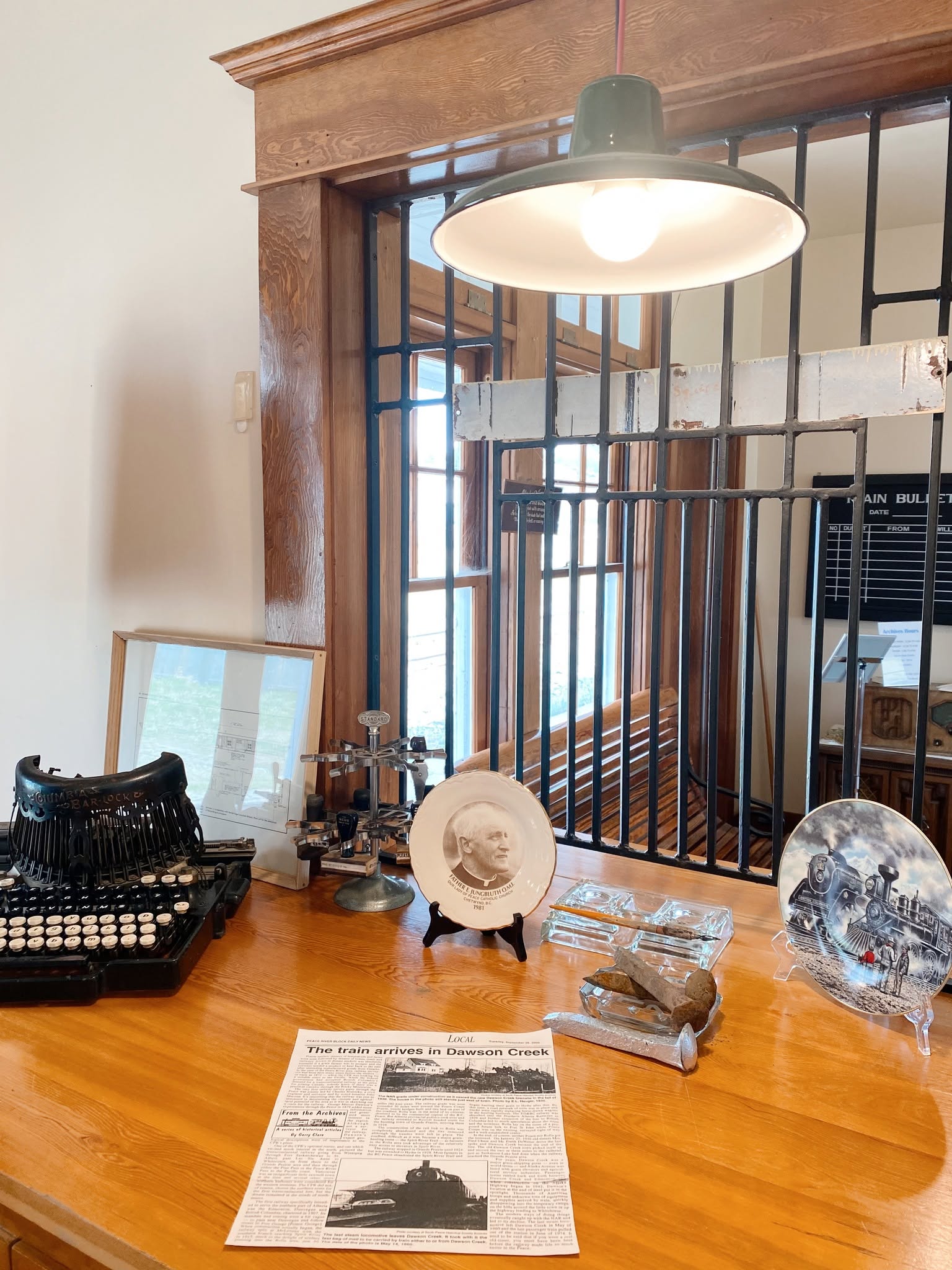
The Northern Alberta Railway (N.A.R.) Station stands as the only designated heritage building in Dawson Creek and anchors N.A.R. Park at the top of 10th Street on Alaska Avenue. In January 1930, the N.A.R. bought land from Duncan McKellar for its yards and reservoir; surveyor Olav Aaberg laid out the first twelve blocks of the new town site, which went on the market that September. The older settlement of Dawson Creek relocated roughly two miles to meet the rails. The final spike was driven on December 29, 1930; the first passenger trains arrived on January 15, 1931, before the station itself was completed in June of that year.
The station served as the western terminus—end of steel—and later as the logistical starting point for Alaska Highway construction in 1942, when troops, supplies, and equipment poured through the yards. Passenger service ended in 1974; the last steam locomotive had already departed in 1960. In 1977, the South Peace Historical Society, under president Walter Wright, purchased the station from the N.A.R. for one dollar. The City of Dawson Creek later acquired the surrounding 4-acre parcel (after negotiations that settled at $315,000) and developed it into N.A.R. Park with lottery grants, municipal funds, interest earnings, and a $250,000 TIDSA tourism grant. Restoration work, aided by Katimavik volunteers and a B.C. Heritage Trust grant, prepared the building for public use.
N.A.R. Park and the Dawson Creek Station Museum officially opened on June 17, 1983. The museum recreates the station agent’s living quarters upstairs and presents four additional galleries covering pioneer settlement, the railway era, wildlife and natural history, and Alaska Highway construction. It shares space and hours with the Tourism Dawson Creek Visitor Information Centre. In 1984, the Canadian Heritage Foundation awarded the park, station, and grain elevator a National Award of Honour.
Dawson Creek Art Gallery
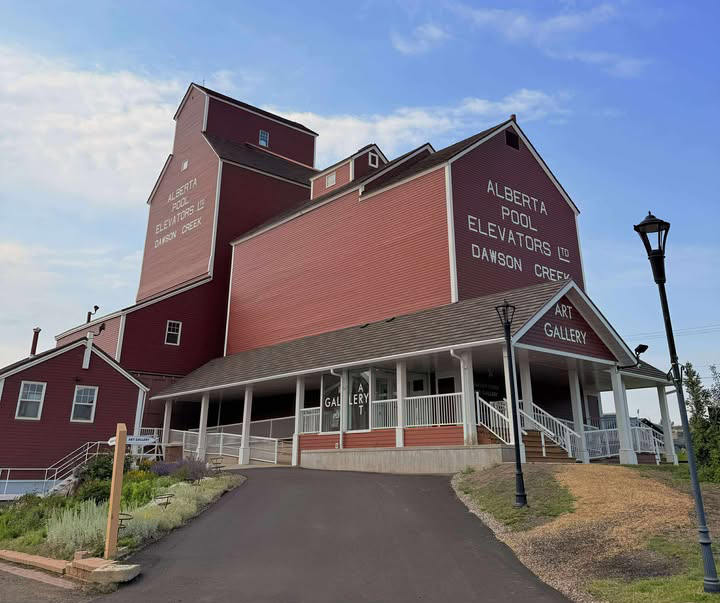
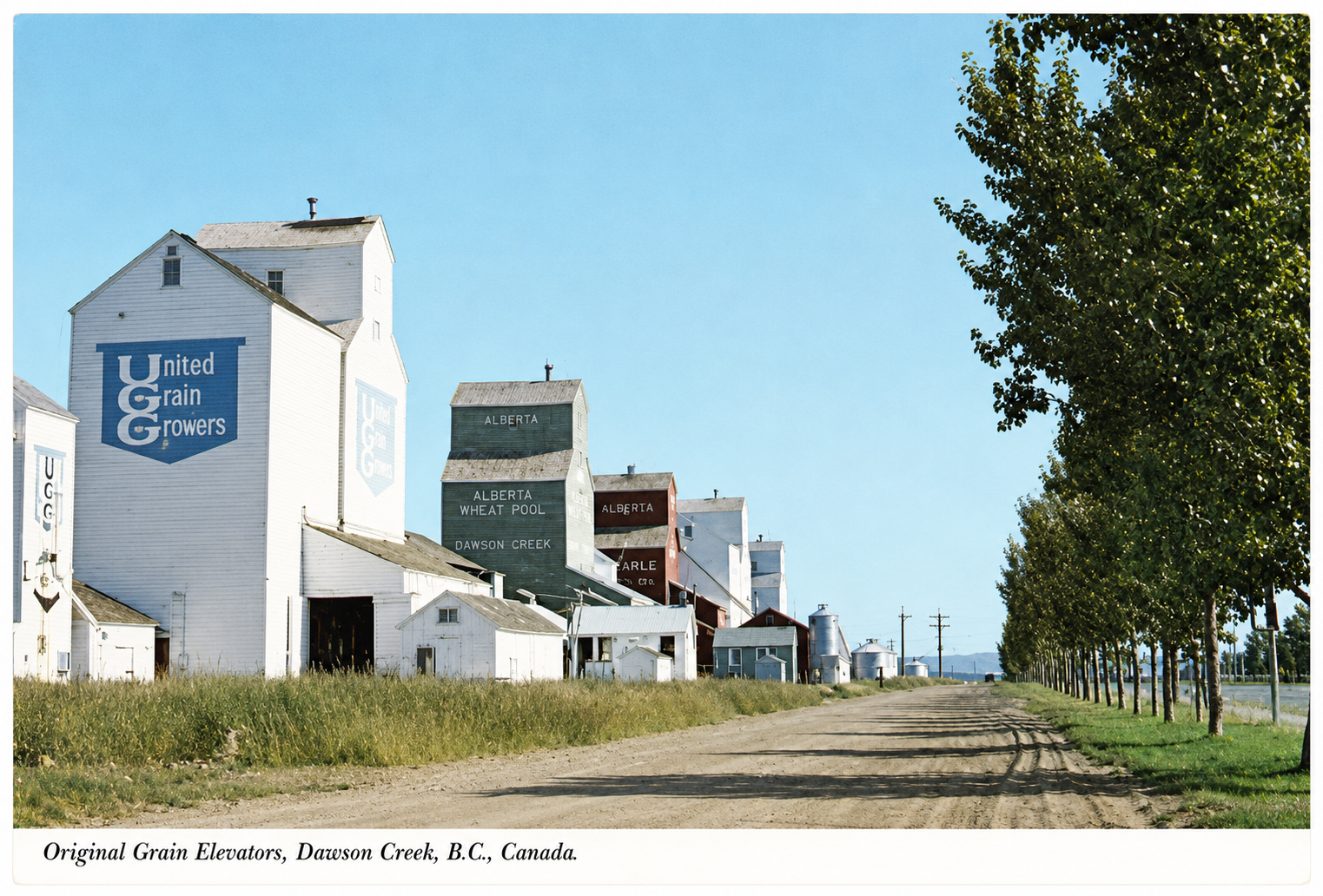
The Art Gallery occupies a renovated 1949 Alberta Wheat Pool grain elevator annex in the same park—an architectural and historical landmark of the region’s agricultural boom. Northeastern British Columbia opened to farming in the 1920s and 1930s; by the mid 1940s the Dawson Creek area ranked among the British Empire’s most productive grain districts for its size, supporting thirteen wooden elevators. Larger concrete elevators later rendered the wooden structures obsolete.
In 1982, with only two elevators left, a “Save the Elevator Committee” (including artist Edna McPhail) persuaded the City to act. The Alberta Wheat Pool sold a 65,000-bushel elevator, 45,000-bushel annex, scale house, and office for one dollar on the condition that everything be moved by November 30th. Mix Brothers of Edmonton relocated the structures (the annex alone weighed 290,000 lbs.; the elevator 460,000 lbs.) to N.A.R. Park between November 19 & 26, 1982 at a cost of roughly $110,000, later supported by provincial, federal, and foundation grants. Local architect Jim Rose designed a spiraling ramp system that created about 200 linear feet of exhibition space inside the annex while preserving the elevator’s exterior and adding interpretive panels on grain-elevator operations.
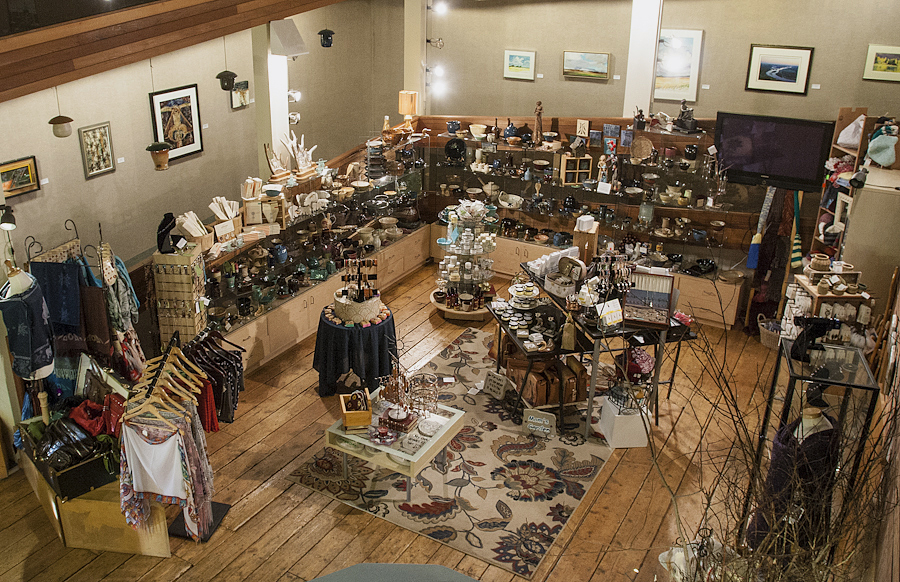
The South Peace Art Society (roots in a 1940s/1950s art group, registered 1962) opened the gallery on October 23, 1983 (some accounts note October 21st). It was the first public art gallery in northern British Columbia. In 1984, it received a Heritage of Canada Foundation Award of Merit; in 2014, the Architecture Foundation of British Columbia named it the northern winner of its Best Building contest. Operated by the artist-run South Peace Art Society on behalf of the City, the gallery presents local, regional, and touring exhibitions year-round, maintains a permanent collection, and houses the Grainery Artisan and Gift Shop. The original main elevator remains open for self-guided tours in summer.
Walter Wright Pioneer Village
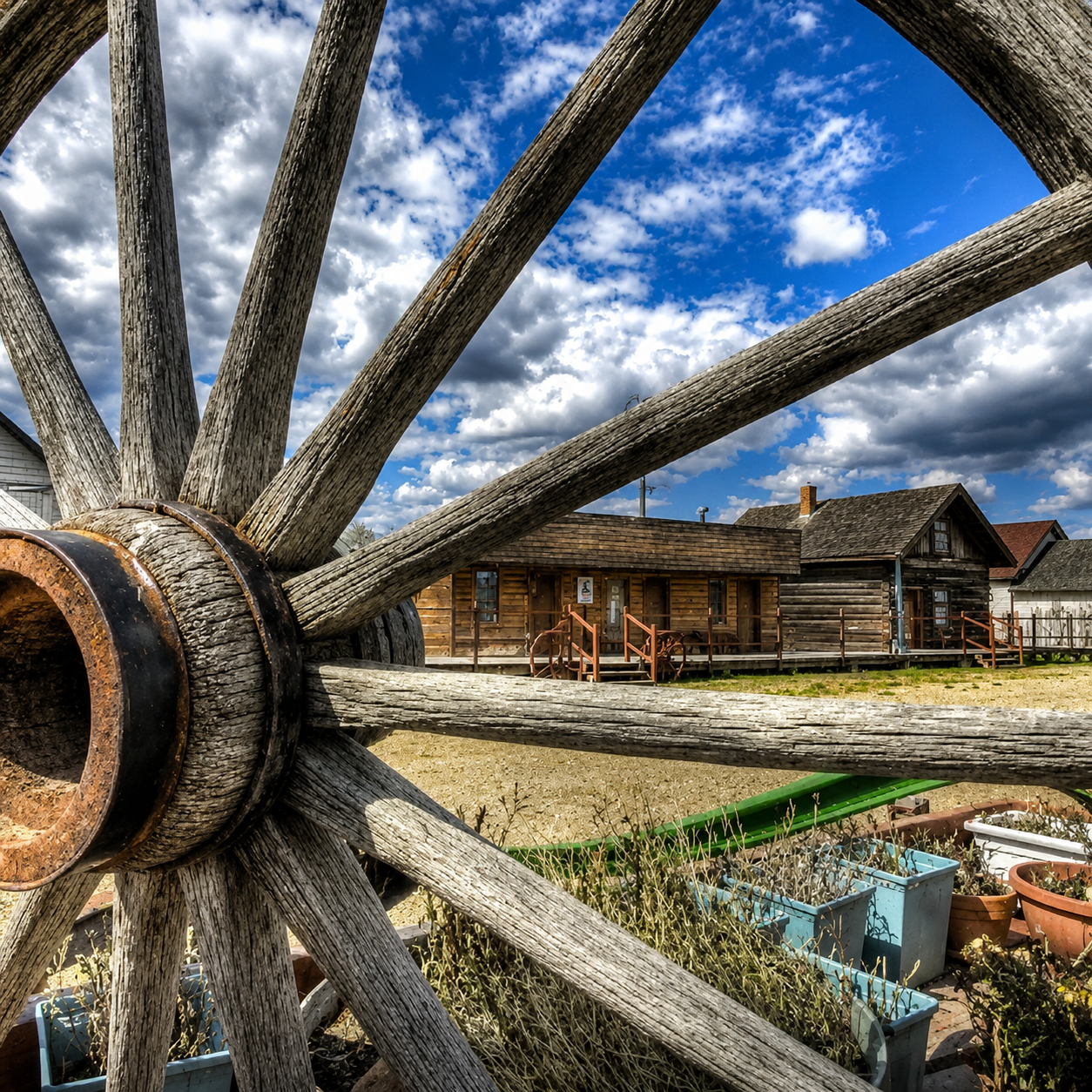
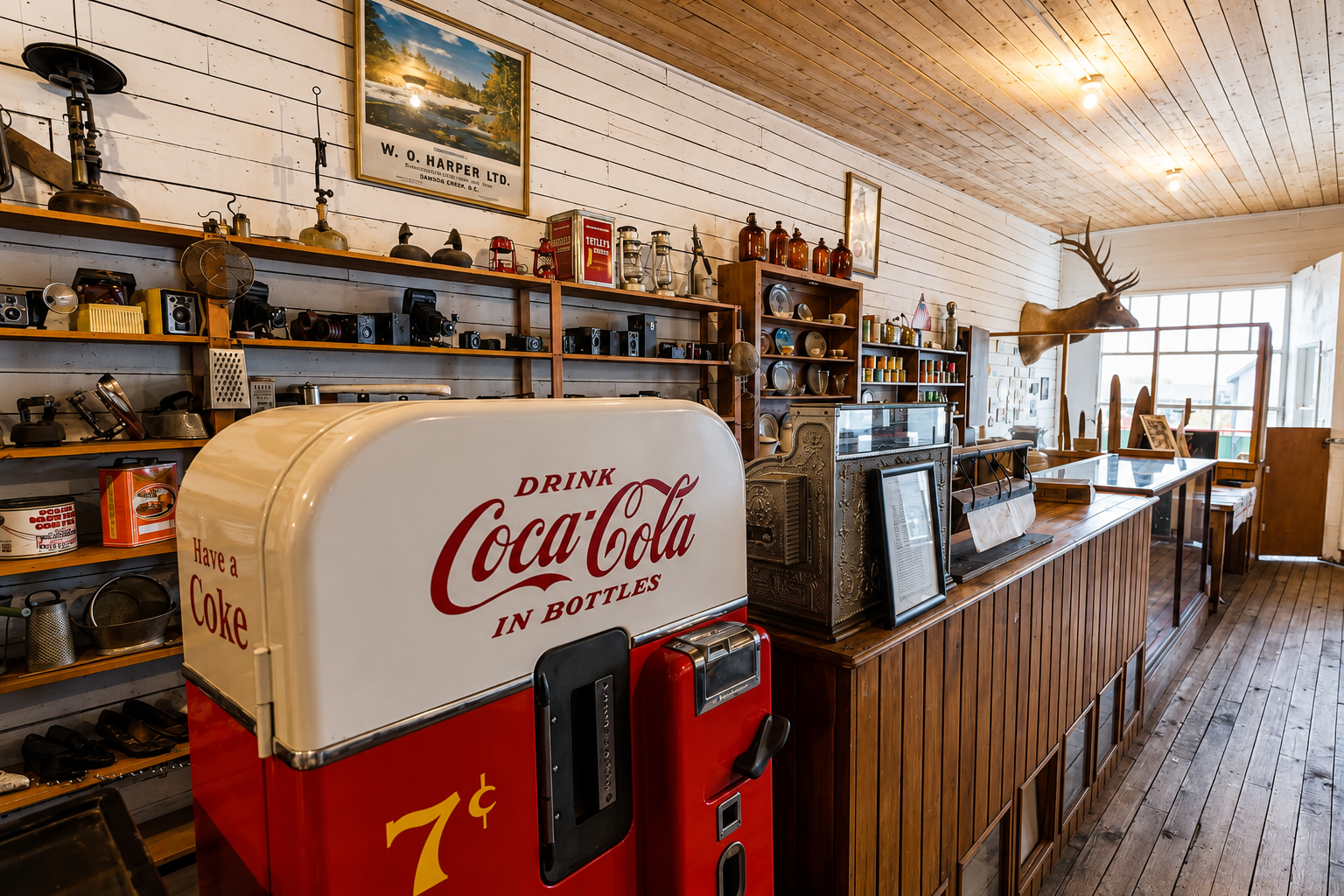
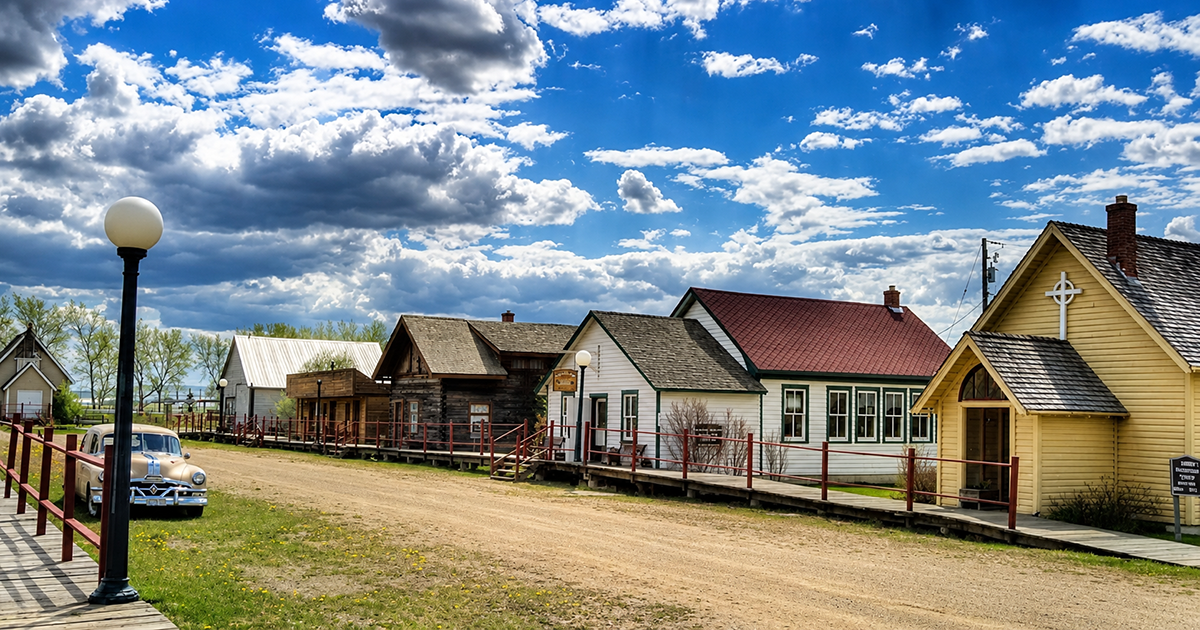
Walter Wright (1915–1980), a long-time Dawson Creek resident, businessman, alderman, and president of the South Peace Historical Society, drove the creation of a pioneer village to preserve buildings and artifacts from the 1912–1945 era. The South Peace Historical Society, governments, service clubs, and volunteers assembled original structures moved from the surrounding countryside plus carefully rebuilt replicas, staging them along a gravel main street with boardwalks. Artifacts, vintage vehicles, and farm machinery completed the scene. The village first opened near the airport on Highway 2 around 1970 (sometimes listed as 1969 or opened to the public later in the decade) and was renamed in Wright’s honour in 1981.
In June 1992, as part of the Rendezvous ’92 celebrations marking the 50th anniversary of the Alaska Highway, the village was relocated and reopened adjacent to Rotary Lake (now part of Mile 0 Park) at 1901 Alaska Highway. The South Peace Mile 0 Park Society was formed that year to manage the village, campground, and lake facilities; the Historical Society retains ownership of the historic buildings and leases them for operation. Notable structures include the 1916 Dawson Creek School (originally Pouce Coupe School), the 1918 Pouce Coupe School, the 1920 St. Paul’s Anglican Church, the 1928 W.O. Harper General Store (replica), the Taylor House (1928), a trapper’s cabin, blacksmith shop, fire hall replica housing historic trucks, Sudeten Hall (built by Sudeten German immigrants who arrived in 1939), and later additions such as a multiplex of period offices and shops. Gardens North and a memorial rose garden enhance the site. Admission is by donation.
Shared Legacy
These three sites form a connected heritage landscape. The South Peace Historical Society (founded 1952) created and continues to support the Station Museum and Pioneer Village; the South Peace Art Society operates the gallery. Together they illustrate how Dawson Creek grew from a railway terminus and grain-shipping centre into the logistical base for the Alaska Highway, while successive generations of residents rescued the physical evidence of that story—grain elevators, a railway station, and pioneer buildings—and gave them new public purpose. Today they welcome travellers, school groups, and locals, keeping the South Peace’s agricultural, transportation, and settlement history tangible and accessible.
Call the office at 780-864-3500 to save a spot on the bus!
Bus Fare: Age 16+ $25.00; Under 16 $5.00
Fare is due upon registration. Riders are responsible for all expenses over and above the bus fare.
The Bus leaves the MD garage at 8:30 AM to pick up passengers at designated locations and will return between 3:30 PM and 4:00 PM.
* Priority given to seniors and people with limited mobility. *