
News You Can Use: News items from external sources that might be useful to MDSR residents.
Proper Dead Livestock Disposal
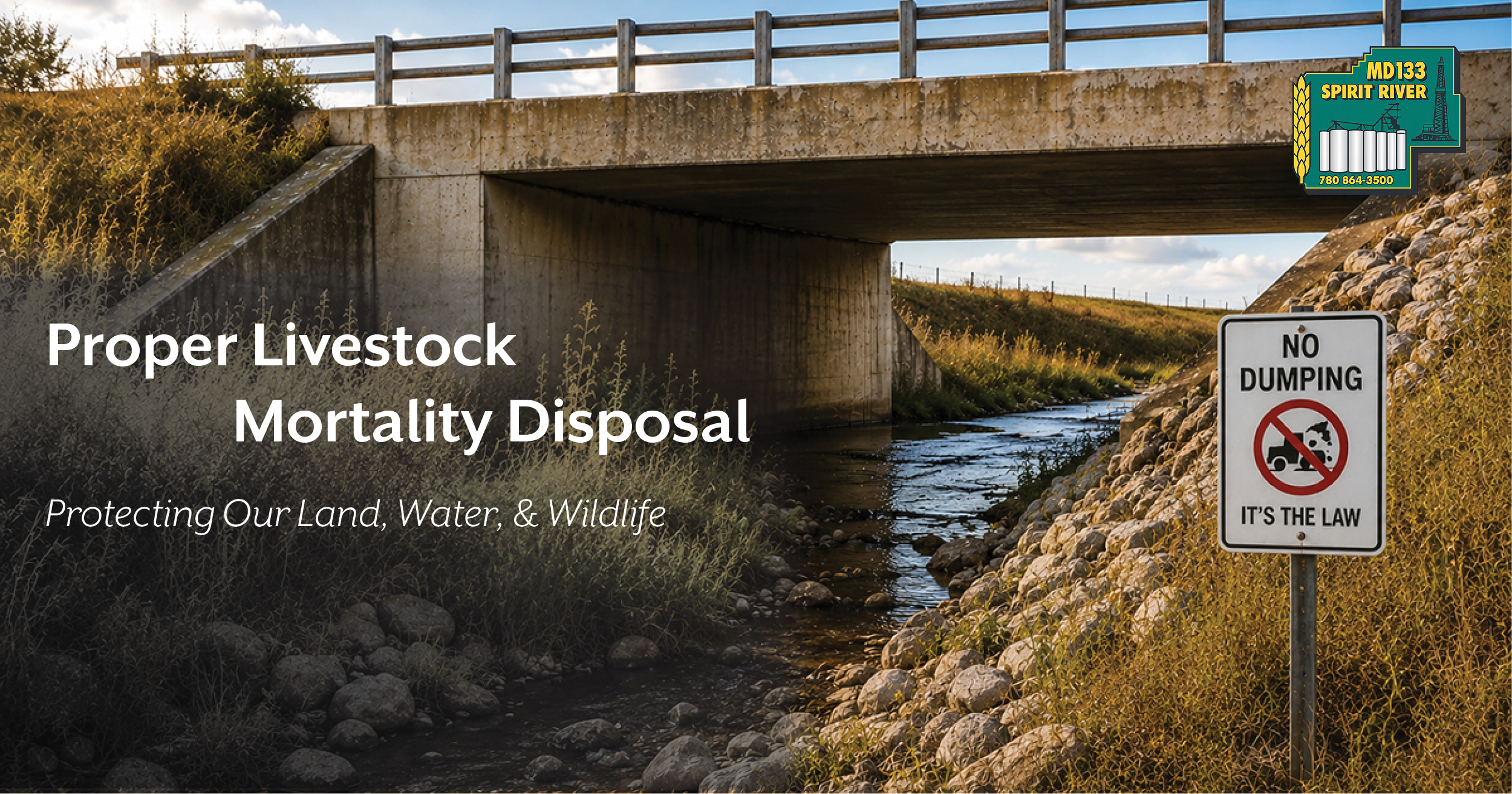
Proper Livestock Mortality Disposal Protects Our Community
The Municipal District of Spirit River #133 recently became aware of livestock mortalities being abandoned under a bridge within the municipality. We would like to remind all livestock owners and producers that disposing of dead animals on public lands, road allowances, under bridges, near waterways, or in other unauthorized locations is not an acceptable method of disposal.
Proper livestock mortality management is important for protecting livestock health, wildlife, water resources, and the environment. Carcasses left in unmanaged areas can attract predators and scavengers, increase the risk of disease transmission, create unpleasant odours, and negatively impact neighbouring properties and public spaces.
Under Alberta’s Disposal of Dead Animals Regulation, livestock mortalities must be disposed of within seven days of death using an approved method. Depending on the circumstances, acceptable disposal methods may include composting, burial, burning, rendering, landfill disposal, or natural disposal under specific conditions.
Many producers have successfully adopted on-farm composting as a practical and environmentally responsible option. When properly managed, composting helps minimize odours, discourages scavengers, and reduces environmental impacts. Technical guides and resources are available to help producers develop effective composting systems and mortality management plans.
For those seeking an off-site disposal option, the Aquatera Waste Management Facility near Grande Prairie accepts both small and large animal carcasses for disposal. Producers are encouraged to contact Aquatera directly to confirm current requirements, fees, and operating hours before transporting livestock mortalities or visit their website @ https://www.aquatera.ca/billing-rates-payments/rates/landfill
Responsible livestock mortality management benefits everyone. By following provincial regulations and approved disposal practices, producers help protect water quality, reduce wildlife conflicts, safeguard livestock health, and preserve the quality of life enjoyed throughout our rural communities.
For more information, visit www.alberta.ca/livestock-mortality-management or contact the MD’s Agriculture Department.